A Rainy Afternoon with a Deck of Cards
A rainy afternoon with a deck of cards can stay easygoing: choose a familiar game, set a gentle pace, and help new players join without fuss.
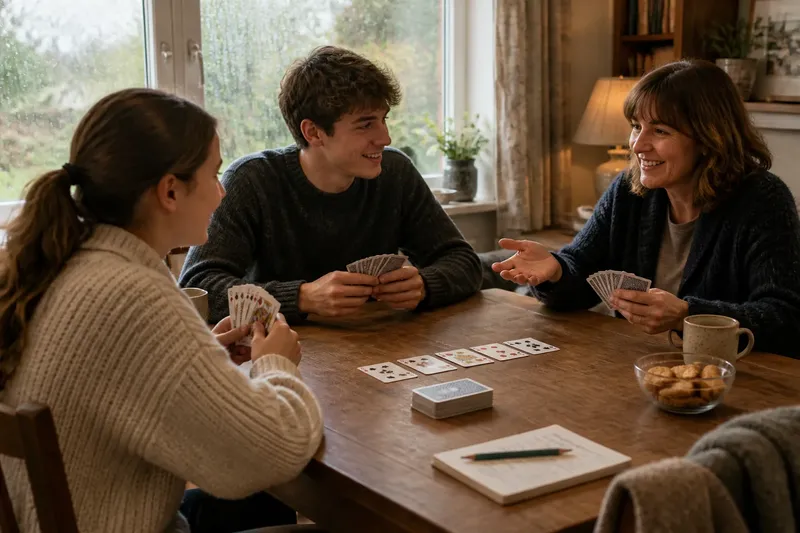
A familiar card game makes a rainy afternoon easier to begin, especially when the rules leave room for conversation. The small frictions are usually practical: choosing a game, teaching it, and deciding what to do when players remember a rule differently. A few clear habits keep the table welcoming without turning a quiet pastime into a committee meeting.
Choose without a debate
A group can spend longer naming possible games than playing one. This often happens when everyone expects a single choice to be quick, strategic, suitable for children, and known by all. That is a tall order for fifty-two pieces of card stock.
Start with a game at least one person knows, then ask whether anyone has a strong reason not to play it. For a mixed group, a familiar matching or trick-taking game is usually easier to begin than one with a long list of exceptions. If the first choice proves awkward, change games after a round rather than reopening the question before the cards are shuffled.
Say three people are at the kitchen table, and one has never played the game the others suggest. They could try a short round with open guidance, then switch if the new player is still unsure. The observable result is that play begins, while the decision remains easy to revise.
Keep one ordinary deck within reach instead of laying several game boxes on the table. Fewer options make the first move easier.
Teach as you play
New players can lose the thread when someone explains every rule before the first card is dealt. A well-meaning teacher may be trying to prevent every possible mistake, but a rule that matters only several turns later is hard to remember while nothing is happening.
Explain the aim, the basic turn, and how a round ends. Then begin with the cards visible and talk through the first decision. Introduce a special rule when it becomes relevant, using the actual cards on the table rather than an abstract catalogue of exceptions.
Make the first round a practice round, with questions welcome and no need to defend a poor choice. Avoid correcting every small slip at once. If a mistake changes the outcome, explain the consequence and agree together whether to rewind or continue; consistency matters more than a perfect reconstruction.
For a game with several special cases, write a few reminder words on scrap paper. Keep the note beside the deck, not in place of explaining the game.
Keep the pace comfortable
One person may think aloud while another plays quickly, leaving a newcomer feeling hurried or a seasoned player feeling stalled. This mismatch often comes from treating each turn as a race or, at the other extreme, letting every choice become a long discussion.
Set a gentle expectation before play: take time to consider a move, but keep advice brief unless someone asks for it. A player who is learning can say, “I’m still deciding,” without needing to apologize. Chat between turns rather than filling every pause with strategy.
Choose a stopping point that does not depend on a particular score or fixed number of rounds. A natural break, such as when the tea needs topping up, gives everyone a chance to continue or put the cards away. If a player is tiring, ending while the table is still pleasant is a perfectly respectable result.
Let the slowest comfortable pace set the rhythm. The cards can wait; the rain is not keeping score.
Share the small jobs
A confident player can become the dealer, rulebook, and commentator all at once. Often this happens because that person knows the game best and wants things to run smoothly. The effect, though, can be that everyone else waits for instructions instead of taking part.
Share small jobs without making them ceremonial. Pass the deck to another player for the next deal, invite a newcomer to read the written rules if available, or ask the group to settle a minor uncertainty together. Rotate the dealer when the game allows it. These changes give each person a reason to handle the cards and make decisions.
If advice is useful, offer it as a question: “Would you like a hint?” A player can accept help without surrendering the choice. If someone prefers to learn by watching, let them observe for a round and invite them in again when ready.
Make the table comfortable
A long spell at a hard chair can make even a pleasant game feel like an obligation. Drafts, glare, a crowded table, or a drink set too close to the cards can also chip away at the calm. These are household details, but they affect whether people want another round.
Clear enough space for the deck and each player’s hand. Move cups away from the cards, bring a lamp closer if the room is dim, and choose seats that do not leave someone straining to see the play. A small table may call for fewer players or a game that uses less space; it need not become a furniture project.
Keep a soft pencil and scrap paper nearby if the game needs a score, but skip scorekeeping if it adds nothing. A blanket can help a chilly player settle in, provided it does not cover the cards or become a hazard underfoot.
Settle rules and choices?
How do you settle a disputed card rule?
Ask what interpretation seems fairest to everyone, apply it for the current round, and use the same interpretation afterward. If the group wants the exact rule, check the game’s instructions between rounds rather than searching during every turn.
What if the group cannot agree on a game?
Choose a game one person can teach and try a short round, then reassess. If nobody is willing to try that option, ask each person to name one game they would accept and choose from that shorter list.
What if someone joins halfway through?
Pause at the end of the round and explain the aim, turn order, and any rule currently in use. If joining midgame would leave the person watching too long, begin a fresh round.
What if nobody wants to keep score?
Play for the pleasure of the turns and stop when people are ready. If a score is necessary to decide the round, use a simple tally on scrap paper and leave it at that.
Put the deck away well
When the cards are put away, gather the deck before cups and plates reclaim the table. Check that the cards are dry and back in their box, and leave any useful house rule with the game so the next gathering can begin without reopening the same debate.
A rainy afternoon with a deck of cards does not need a clever format or a perfect teacher. Choose one known game, make the first round forgiving, and give each person room to learn at their own pace. The practical test is whether the table feels easy to return to.