Why a Doorstep Collects the Work of a Day
Why a doorstep collects the work of a day comes down to routine and location. Sort everyday items by their next destination to give each a sensible place.
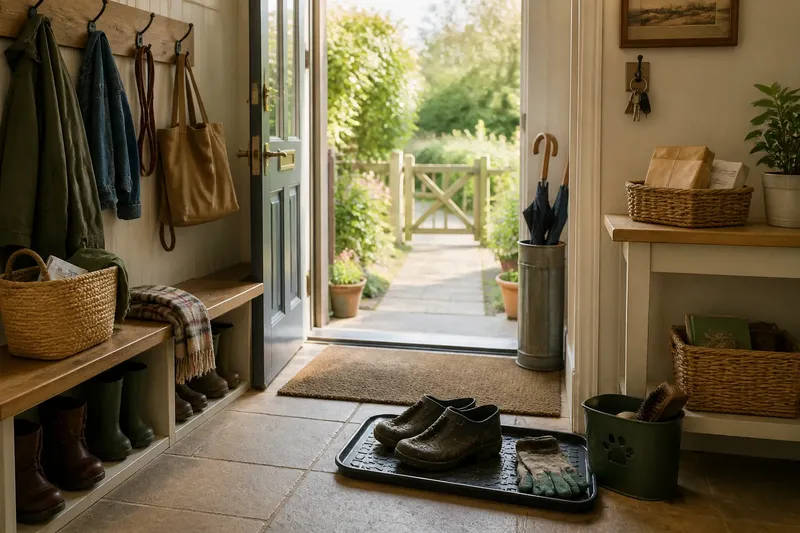
A doorstep collects the work of a day because it sits between two sets of habits: the ones that happen outdoors and the ones that begin inside. A doorstep is not simply a strip of floor to keep clear. It is a handoff point for muddy shoes, a parcel, garden gloves, a dog lead, or the note you meant to carry back out. The useful question is not how to make the entrance hold more, but where each item should go next.
Read the arrival
Watch what happens when someone comes in carrying something. A pair of boots may stop at the mat, while a coat continues toward a hook. A seed packet might be left beside the door because it belongs in the potting shed, not in the kitchen. These pauses reveal the entrance’s actual job: it catches items until the next action is possible.
Sort the objects by destination rather than appearance. Similar-looking things may need different homes. A clean walking shoe belongs with footwear; a muddy garden clog may need a tray near the back door and a brush close by. The tray is useful not because it makes the shoes tidy in the abstract, but because it keeps damp grit from following them farther in.
For a few days, notice what gets set down and what gets carried onward. No inventory is needed; repeated interruptions are usually obvious.
Choose by routine
The right arrangement depends on what your entrance repeatedly receives. Use the situation that matches your household, then give the objects a home that supports their next step.
- If outdoor shoes arrive wet: Put a washable mat and a shallow, easy-to-clean boot tray at the entry. Keep a brush nearby if dirt commonly clings to soles. This fits households where shoes need attention before they can join the indoor footwear.
- If coats and bags pile up: Use sturdy hooks at a height the household can reach, with a separate hook or space for each regular user. A bench can help with changing shoes, but it should not become a shelf for unrelated objects.
- If items are carried back outside: Create a small “outgoing” spot for a library book, garden twine, or reusable shopping bag. Keep it distinct from the place for things that have just come indoors, so errands do not become a guessing game.
- If parcels and deliveries collect: Reserve a clear surface or basket for items awaiting attention, away from the path through the entrance. If packages must be protected from weather or kept out of reach, choose a location that suits those needs rather than leaving them on the threshold.
- If the entrance is narrow: Favor wall hooks, a slim mat, and a small container for a few frequently used items. A large bench or deep cabinet may turn a passage into an obstacle course.
Say you come in from the garden with muddy clogs and a pair of gloves. If the clogs stop on a boot tray and the gloves go in a labeled bin beside it, the next trip outdoors has a clear starting point; the entry floor also stays easier to sweep. That is a practical arrangement, not a promise that nobody will ever leave a glove on the windowsill.
What belongs here?
Should keys stay by the door?
They can, if everyone uses the same place and the spot is not easy for a passerby to reach through an open door or window. A small hook or dish near the usual exit works better than a decorative bowl that collects receipts, coins, and unidentified screws.
Where should wet umbrellas go?
Use a stand or a washable container that can catch drips without blocking the doorway. If the entry has no room, a nearby utility area may be a better drying place than the floor beside the mat.
What if several people share one entrance?
Give each person a simple, visible place for the items they routinely carry, rather than relying on one communal pile. Shared objects such as a dog lead can have their own fixed hook, so no one has to search among coats.
How much storage should the entry hold?
Keep only what is used at the entrance or needs a brief stop before moving elsewhere. Seasonal equipment, spare supplies, and items with a different destination are better stored where they are used, not pressed into service as permanent doorstep residents.
Keep the handoff clear
A useful entrance has a clear route through it. The place for boots should not obstruct the door swing; the outgoing basket should not sit where a parcel needs to be set down. If a piece of furniture makes the entry harder to pass through, its storage capacity is beside the point.
Choose containers that suit what they hold. A woven basket can corral gloves or reusable bags, but it is less convenient for wet footwear. A plastic or metal tray is easier to wipe after muddy shoes. Open storage makes contents visible; a closed cabinet keeps the view calmer but may hide the very item someone needs in a hurry.
Make the arrangement easy to reset. Keep a small cloth or hand brush nearby for routine dirt, and place each item’s home close to the point where it is used. For household products or fixtures that require specific care, follow the manufacturer’s directions and any applicable local requirements.
Let seasons change places
What arrives at the door shifts with the weather and the work outside. Rain gear may need more space during a wet spell; gardening gloves and seed packets may take over when the beds are being tended. Rather than adding permanent storage for every passing need, move a few items closer to the entrance when they become regular visitors, then return them to their usual storage when the routine changes.
Keep the transition modest. A washable mat can replace a lighter one; a tray can move nearer the door; a small hook can take the place of a rarely used accessory. The aim is not to display the season but to make the current routine easier to finish.
Why a doorstep collects the work of a day becomes clearer when each object is treated as a message about what happens next. Give the message a place: wet shoes to the tray, outdoor gear to its hook, and things headed elsewhere to a temporary landing spot. The entrance need not be elaborate. It only needs to help the household carry the day across the threshold without bringing all of it indoors.