The Spare-Room Ready Myth
A guest room need not sit untouched to welcome company. Give it an everyday purpose, then use a simple reset to make it comfortable when needed.
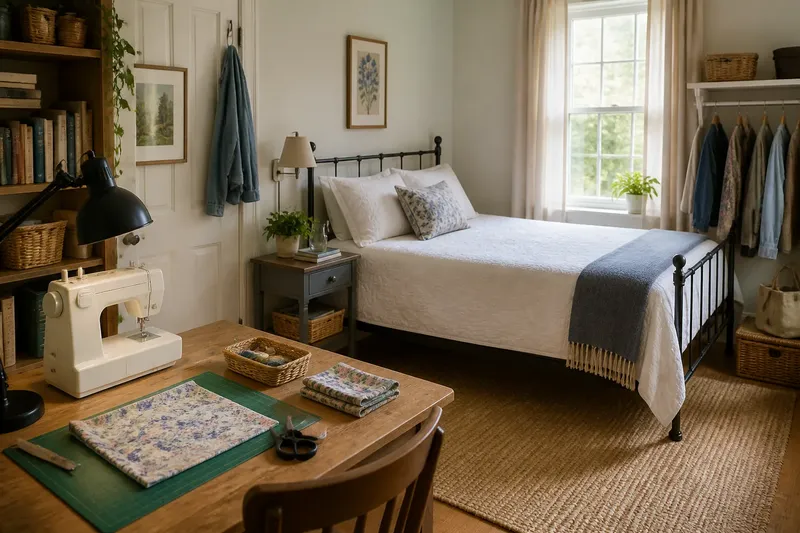
A guest room can hold a sewing machine on Tuesday and welcome a visitor on Friday. The spare-room ready myth says the room must stay empty and staged; in practice, a bedroom can serve the household every day and still be comfortable for guests with a short, planned reset.
The point is not to leave visitors negotiating with a pile of laundry. Decide what belongs in the room, where movable items go, and which tasks matter before company arrives. Start with the room you have, not an imagined photograph of a guest room.
Choose its daily purpose
Decide what the room should do for the people who live there. It might be a reading room, a place to mend clothes, a quiet office, or storage for seasonal linens. Choose one main use rather than assigning it every task that has nowhere else to go. A room serving as office, pantry overflow, drying room, and parcel depot is not multipurpose so much as a polite dispute among objects.
Look at the furniture and routine already there. A desk can stay if it does not block access to the bed. A bookcase can keep its contents if guests can still use the room. A clothes rack is less convenient if it must be emptied before a visitor can set down a bag. The room need not look like a bedroom on an ordinary day; its everyday use should simply be easy to pause or adapt.
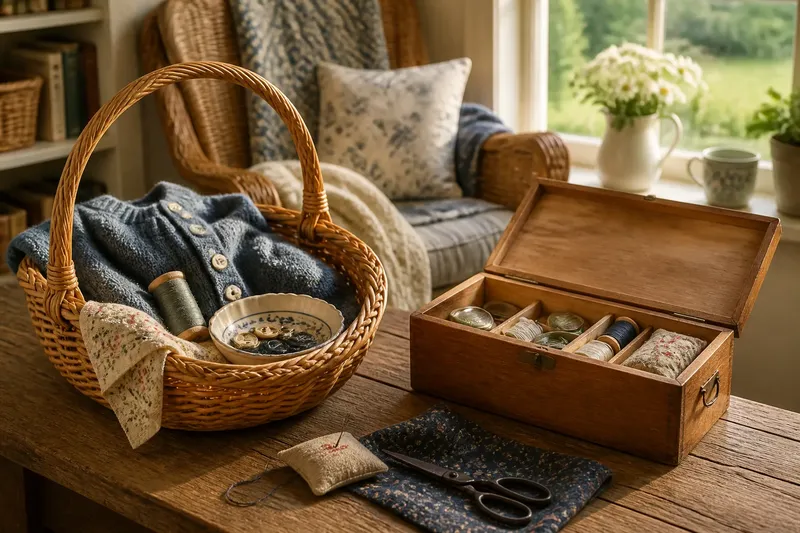
Say you use the room for hand sewing, with a small table, lamp, and lidded basket beside the bed. For an expected visitor, move the basket to a hall cupboard and leave the table and lamp in place. The bed is clear, the surface remains useful for reading, and the sewing supplies stay together rather than spreading across the house.
Set a clear boundary
Decide which parts of the room need to change for a visitor and which can remain. The bed, a place for clothing, and a clear route through the room are the practical core. A desk, books, or craft supplies can stay if they do not get in the way. Thinking in zones keeps “make the room ready” from turning into a household overhaul.
- Check whether the route from the door to the bed and storage is clear; if it is, leave it open, and if not, move the obstruction to its planned home.
- Check whether a bedside table or desk has room for a book, phone, or glass; if it does, keep that surface available, and if not, move its contents elsewhere.
- Check whether everyday items can remain visible without crowding the room; if they can, leave them, and if not, contain them in a basket or box.
- Check whether there is a place for a visitor’s bag and clothing; if there is, keep it accessible, and if not, clear a hook, shelf, or section of rack.
- Check whether moved belongings have a nearby destination; if they do, use it, and if they do not, simplify the room’s daily setup rather than making a new pile elsewhere.
- Check whether guests can reach the bed without moving work materials; if they can, leave the setup in place, and if not, reduce or relocate the materials before the visit.
These boundaries also show whether the room is carrying too much. If every ordinary use must be dismantled, pare back the setup or give some belongings a more suitable home. Design for an easy reset, not a burst of tidying.
Give movable things homes
Before planning a reset, decide where the things that move will go. A lidded basket can gather sewing supplies; a document box can hold desk papers; a folding screen can obscure a clothes rack without requiring it to be emptied. Choose containers that suit their contents and are safe to carry. The aim is an orderly, reversible change, not clutter in a more portable form.
Keep each destination realistic. If the only available storage is a crowded attic, a plan to move desk contents there may be abandoned when a visitor is expected. A hall cupboard, another room’s shelf, or an under-bed container may work better. Keep frequently used items accessible if the household still needs them during the visit; a guest’s comfort need not make the sewing kit disappear.
If furniture must move, consider its weight, the floor surface, and whether another person should help. For wall-mounted fixtures, wiring, or other safety-sensitive work, consult a qualified professional rather than improvising around a guest bed. An ordinary reset should mostly involve belongings, linens, and surfaces.
Make a guest reset
When company is expected, use a consistent order. Clear the sleeping area, make the bed, then prepare surfaces and small comforts. Air the room if conditions allow, and check that it feels pleasant as well as tidy.
- Clear the bed. Remove projects, folded laundry, and stored belongings. Put each item in its planned home instead of making another pile.
- Prepare the bedding. Use clean sheets and pillowcases. Check that the available blanket suits the season and the visitor’s comfort.
- Clear a usable surface. Make room on the bedside table or desk for personal belongings. Put away cups, paperwork, and objects that need special handling.
- Make storage available. Clear hangers or a shelf, and leave the planned place for a bag accessible.
- Check the room. Air it if conditions allow, dust the surfaces the visitor will use, and make sure the route to the door is clear.
- Set out modest essentials. Leave a glass or water carafe if appropriate, and make towels easy to find. Skip extras the visitor may not want.
This order starts with the main practical need and ends with details. A folded throw is a pleasant extra, but it cannot compensate for a bed buried under a knitting project.
What do guests need?
Can the room still be an office?
Yes, if the bed and guest storage remain accessible and work materials stay contained. Put away confidential papers and fragile or valuable items, then keep the desk available only if it adds comfort rather than making the visitor feel they have borrowed someone’s workstation.
Should the bed stay made?
It can, but it need not remain untouched between visits. If the room has another daily use, store clean bedding nearby and put it on during the reset; a made bed is useful only if it does not prevent the room from serving the household.
What if there is no closet?
Offer a practical alternative, such as a clear hook, a small rack, or an empty shelf, and make room for a bag. The aim is to give belongings a place, not to reproduce the fittings of a larger house.
How much should be left out?
Keep what makes the room comfortable and easy to use, then stop. Clean bedding, a clear surface, and accessible towels usually serve better than decorative objects a guest must move before settling in.
Return the room
After a visit, remove used linens, return movable supplies to their chosen places, and note anything that would make the next reset easier. If a storage destination proved awkward, change it while the problem is fresh rather than repeating the same irritation.
Keep the guest arrangement simple enough to repeat. The spare-room ready myth asks a household to preserve a room for an uncertain future; a more useful custom gives that room a daily purpose and a straightforward way to welcome visitors. For a spare room, the practical question is whether its everyday use and guest needs can both be met without making either one a nuisance.
Give every movable item a home, and the room can serve the household between visits and its guests when they arrive.